The Art and History of Rope Bondage — And Why We Teach It
There is a moment in every Rope Bite class when someone picks up the rope for the first time and you can see them recalibrate. They expected to learn a technique. What they’re actually holding is several hundred years of human history — restraint, artistry, intimacy, and craft all coiled together in a few meters of natural fiber.
That’s the thing about rope bondage that most beginner guides skip over entirely. They jump straight to the knots. And the knots matter — we’ll get there — but understanding what you’re doing and where it comes from changes how you approach the rope from the very first tie.
That’s the philosophy behind Rope Bite at The LoftNC. Before we teach you how to hold the rope, we teach you why it’s worth holding.
The History of Rope Bondage: From Utility to Art
Rope bondage, often referred to as shibari, is widely associated with intricate patterns and expressive, intimate connection. While many people trace its roots to Japan, the full story is a bit more nuanced—and far more interesting.
From Restraint to Influence
In historical Japan, a system called hojojutsu was used by samurai and law enforcement to restrain prisoners. These techniques were practical, designed for control, transport, and display—not for art or intimacy. Different tying methods could even signify the status of the person being restrained.
While modern rope practices are often said to “come from” these traditions, it’s more accurate to say they were influenced by them, rather than directly descended. The aesthetic and emotional elements that define rope bondage today developed much later.
The Emergence of Kinbaku
The transformation of rope into an expressive and intimate practice began in the late 19th and early 20th centuries. During this time, imagery inspired by restraint—seen in theater, visual art, and early publications—began to take on a more stylized and erotic form.
This evolution led to what is known as kinbaku, meaning “tight binding,” which emphasizes not just the physical act of tying, but the emotional, psychological, and aesthetic experience shared between participants. Over time, these ideas spread beyond Japan and were adapted in different ways across cultures.
Shibari in the Modern World
Today, the term shibari—which simply means “to tie” in Japanese—is commonly used, especially in Western communities, to describe artistic rope bondage. While some practitioners focus on traditional forms and techniques, others explore rope as a modern, evolving art form.
Contemporary rope practice is incredibly diverse. For some, it’s about visual beauty and pattern. For others, it’s about connection, trust, and communication. And for many, it’s a blend of all three.
A Living, Evolving Practice
Rather than a single, unbroken tradition, rope bondage as we know it today is best understood as a living practice—one shaped by historical influences, cultural exchange, and the people who continue to explore it.
What remains consistent across styles and communities is an emphasis on intentionality, consent, and learning. Like any skill, rope is something that benefits from education, guidance, and respect for both its history and its risks.
What Rope Bondage Is Actually About
Strip away the history and the terminology debates, and rope bondage comes down to a few things that remain constant across every tradition and style:
Presence. The process of being tied is itself an intimate act — your partner’s hands wrapping rope around skin, adjusting tension, creating patterns. It takes time. It requires attention. That slow, deliberate contact builds connection in a way that faster forms of restraint simply don’t match.
Communication. This is not optional. The rope top and rope bottom are in constant communication — verbal and non-verbal — throughout every tie. A skilled rigger reads their partner’s body as carefully as they read the rope. A skilled rope bottom learns to articulate what they’re feeling, precisely and in real time.
Craft. Rope has a learning curve. Knots have mechanics. Bodies have anatomy. Safety has rules that are not suggestions. The gap between “I watched some videos” and “I know what I’m doing with rope” is significant — and that gap is exactly where injuries happen.
The Safety Conversation You Have Before You Pick Up the Rope
Rope bondage carries real risks. Anyone who tells you otherwise is either inexperienced or not paying attention. The two primary concerns are nerve compression and circulation restriction — and both are manageable with education, not avoidable through luck.
Our bodies are filled with nerves, and it’s difficult to tie one up without crossing some of them. Rope bondage always carries a risk of damaging nerves, regardless of the style or setting.
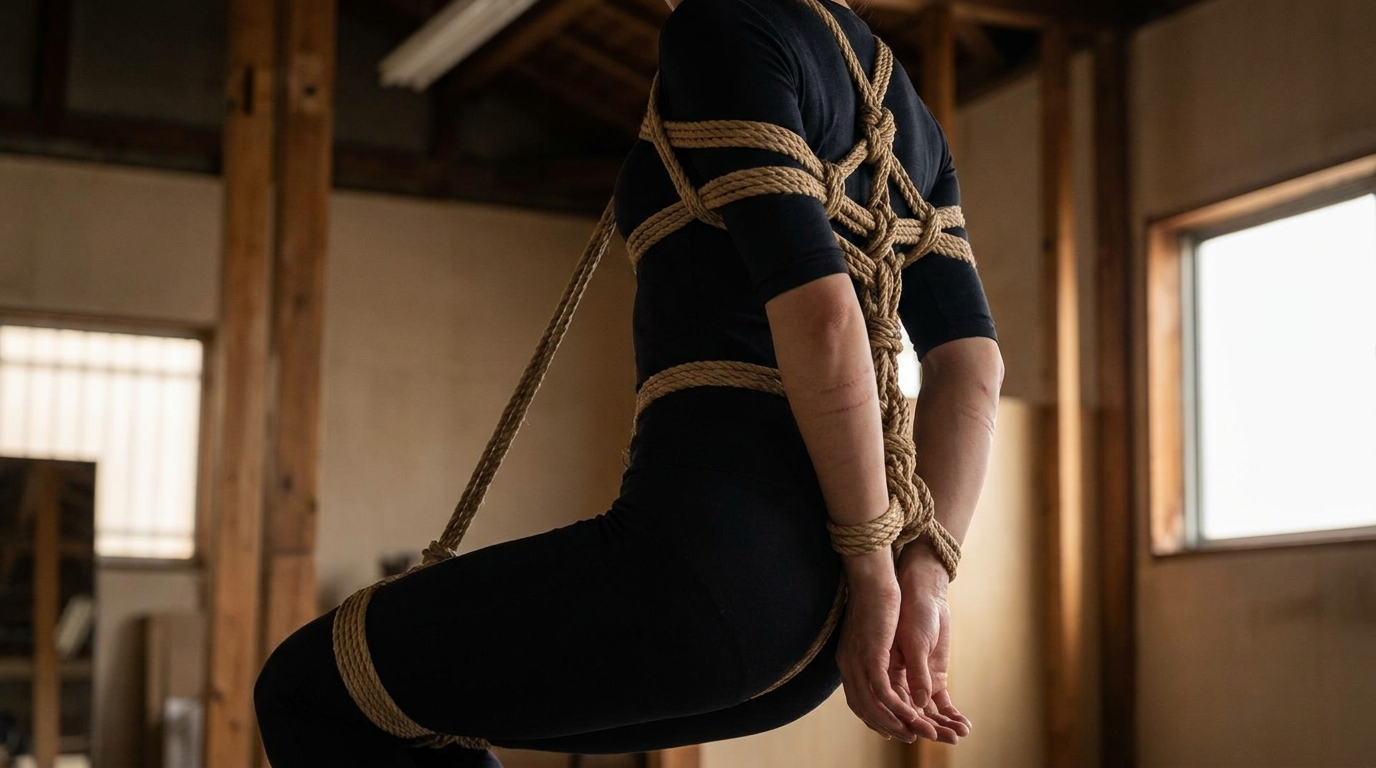
Anecdotally, most problems with bondage are caused by damage to the radial nerve, in most cases due to tight or load-bearing ties across the upper arms. The radial nerve wraps around the upper arm and is close to the surface, where people often place rope in box ties and similar configurations.
The good news: these risks are substantially reduced through proper technique, body awareness, and communication. The most common causes of nerve damage during rope bondage are direct or indirect pressure on nerves and restricted blood and oxygen flow to nerves. Symptoms include tingling or burning, numbness, or loss of mobility.
What does this mean practically?
- Know the nerve pathways before you tie near them
- Maintain continuous communication — numbness is a signal to stop and adjust, not push through
- Keep EMT shears within reach at every session, every time
- Rope should never be left in a position unattended
- The two-finger rule: you should be able to slide at least two fingers under any wrap
Rope tops have a serious responsibility to educate their partners to alert them when they have bad pain or sensations so they can adjust. Bondage tops are responsible for educating their rope partners about warning signs and communication methods before tying them.
This is not meant to frighten anyone away from rope. It’s meant to frame why learning in a structured environment — from someone who has spent years developing both skill and safety instinct — is the difference between a beautiful experience and an injury.
What Rope Bite Is — and What It Isn’t
Rope Bite at The LoftNC is a beginner class. That framing matters.
We are not teaching performance shibari in a single evening. We are not assuming you’ve handled rope before, have any knot knowledge, or have any prior BDSM experience at all. You don’t need any of that to walk through the door.
What you do need: genuine curiosity, a willingness to ask questions, and the understanding that what you’ll learn in this class is a foundation — not a finish line.
In Rope Bite, you’ll cover:
- The language of rope bondage: top/bottom, rigger/bunny, the terms that will follow you through every future class and conversation in this space
- Basic knots and their mechanics — why certain ties are safer than others and how to recognize a collapsing knot before it becomes a problem
- Body anatomy as it relates to rope: nerve pathways, circulation, the areas where you never tie without specific training
- Communication frameworks: how to check in, how to read your partner, how to use a safeword in the context of bondage specifically (it’s a slightly different conversation than in other BDSM contexts)
- The emotional landscape: rope bondage creates altered states in both partners. Knowing what rope space and top space feel like — and what aftercare looks like when they end — is part of every beginner class
What you won’t leave with: a complete skill set. That’s not a failure — it’s the design. Rope is a practice that builds over time. Rope Bite gives you the foundation and the vocabulary to keep learning safely.
A Note on Learning Rope in Community
There’s a reason the rope community has always been community-based. The tactile, relational nature of this practice doesn’t translate well to solo study. You can learn knots from a book. You cannot learn how to read a partner’s body from a book.
The Charlotte area kink community has access to something genuinely valuable in Rope Bite: structured, in-person instruction from Lady Leigh, who brings decades of experience to the teaching floor. Not just rope technique — but the judgment, the body awareness, the communication instincts that only come from real experience.
If you’ve been curious about rope bondage and haven’t known where to start — this is where you start. Not a YouTube tutorial. Not trying it with a partner based on what you think you remember. A class. A structured environment. A teacher who has seen what goes wrong when people skip the foundation, and what goes right when they don’t.
Ready to Start?
Rope Bite runs at The LoftNC in Gastonia, NC — serving the greater Charlotte metro area. All skill levels are welcome. You don’t need a partner — come solo and you’ll have someone to work with. You do not need to be an active member of The LoftNC to attend.
RSVP on FetLife . Space is limited by design — smaller classes mean more hands-on time with Lady Leigh and more actual rope practice.
Questions before you come? The LoftNC’s FetLife page and org account are open for DMs.
Lady Leigh has been teaching rope bondage in the Charlotte area for [X] years. Rope Bite is part of The LoftNC’s ongoing education series, which includes classes across the full spectrum of BDSM practice — from beginner fundamentals to advanced technique.

Lady Leigh is the owner of The LoftNC and a regionally respected educator and leader in the BDSM/kink community, with decades of experience in safe practice, consent education, and community building in the greater Charlotte area.